Friday, May 6, 2016

Aloe Vera Juice Side Effects

Aloe Vera Juice Side Effects

Aloe vera is a succulent plant with long, thick, waxy leaves containing inner gel and outer gel, along with latex liquid from the inner leaf skin. People use aloe vera gel and juice for topical and oral health remedies. You can grow aloe as a houseplant and make juice by breaking off leaves and scooping out the gel, then juicing this gel in a blender. Aloe vera juice also is available commercially. Side effects are uncommon.

Laxative Effects

The inner leaf of aloe vera has laxative effects, according to MedlinePlus. Consuming large amounts of whole leaf aloe vera juice rather than juice made from the gel alone can cause painful abdominal cramping, loose stools and diarrhea. Using this type of juice longer than a week can lead to laxative dependency and constipation after you stop drinking the juice. People experiencing this type of diarrhea may develop dehydration and electrolyte imbalances, including low potassium levels, especially if they are diabetic or have kidney disease. Low potassium levels can lead to muscle weakness and irregular heart rhythms. The laxative effects of whole-leaf aloe vera juice also can decrease the absorption of many drugs. Consuming aloe products including the latex for over one year may increase the risk of colon cancer, notes MedlinePlus.

Blood Sugar Reduction

Drinking aloe vera juice may reduce blood glucose levels. MedlinePlus advises people prone to hypoglycemia and those taking medications such as metformin or insulin to regulate blood sugar to be cautious about consuming aloe vera juice.

Skin Irritation

Although aloe is used topically to heal certain skin disorders, it also may cause skin irritation. Surgical wounds have healed more slowly after application of aloe, according to MedlinePlus. Additionally, applying aloe juice to the face after a skin peel (dermabrasion) may cause redness and burning. Applying aloe vera juice to the skin before sun exposure can cause a rash.

Allergic Reaction

Some people are allergic to aloe. This allergy is especially common in people who are allergic to plants in the Liliaceae family such as garlic, onions, hyacinths, lilies and tulips. Signs of an allergic reaction may include skin rash or hives, itchy or swollen skin, difficulty breathing, tightness in the throat or chest and chest pain. An allergic reaction to aloe vera juice should be considered a medical emergency.
I found this Q&A online today. Dr. Fox, the animal doctor from the Washington Post, was answering some questions from pet owners. It started off with a question about natural flea control. Another reader was very upset because she had found out that one of her two new cats had a terminal disease called Feline infectious peritonitis, FIP. FIP is a fatal incurable disease that invades and grows in white blood cells causing the immune system to respond with intense inflammation in the containing tissues. It seems that it is very common in places where large groups of cats are kept together (animal shelters). Most common transmission is through the inhalation or ingestion of the virus through feces. The owner wanted to know if there was anything she could do for the cat since she has proven to be sensitive to any medicine.

The doctor responded telling her, “As long as an animal is not suffering and has some quality of life, has a good appetite and enjoys being petted and gentle play, then never give up.” Dr. Fox went on to suggest a raw-food diet and a couple of supplements including (shocker shocker) human grade aloe vera liquid!
I don’t actually find it that shocking that a sick cat would respond to aloe vera liquid in a good way. True, Animal Poison Control and a couple of different sites out list the aloe plant as toxic to felines. They are referring to chewing or gnawing on the plant. However, holistic veterinarian practitioners have found that there are benefits from the juice extracted. There are also studies that have been done using acemannan obtained from Aloe vera to treat the feline leukemia virus.
Acemannan is a compound that is extracted from aloe and is known to have immunostimulant, antiviral, antineoplastic, and gastrointestinal properties.
Feline leukemia is a viral disease that kills all affected cats, 40% die within 4 weeks, and 70% within 8 weeks. In the study I looked at from back in 1991, injections of acemannan were given to cats infected with the virus. After 6 weeks the survival rate and the quality of life of the infected cats were improved. After 12 weeks, 71% of the cats used in this experiment were still alive and in good health! That’s a lot more than 4 weeks. I hear the owners of those cats were very grateful.
Aloe is also being used for the treatment and clinical management of fibrosarcoma in cats and dogs. It has prolonged the survival of the animals.

Well, it seems like aloe’s natural healing properties are not just for humans alone, at least in some forms. Remember, always consult with your veterinarian before you give your cat any supplement!

Thursday, May 5, 2016

In the News: Aloe Vera and Cats

I found this Q&A online today. Dr. Fox, the animal doctor from the Washington Post, was answering some questions from pet owners. It started off with a question about natural flea control. Another reader was very upset because she had found out that one of her two new cats had a terminal disease called Feline infectious peritonitis, FIP. FIP is a fatal incurable disease that invades and grows in white blood cells causing the immune system to respond with intense inflammation in the containing tissues. It seems that it is very common in places where large groups of cats are kept together (animal shelters). Most common transmission is through the inhalation or ingestion of the virus through feces. The owner wanted to know if there was anything she could do for the cat since she has proven to be sensitive to any medicine.

The doctor responded telling her, “As long as an animal is not suffering and has some quality of life, has a good appetite and enjoys being petted and gentle play, then never give up.” Dr. Fox went on to suggest a raw-food diet and a couple of supplements including (shocker shocker) human grade aloe vera liquid!
I don’t actually find it that shocking that a sick cat would respond to aloe vera liquid in a good way. True, Animal Poison Control and a couple of different sites out list the aloe plant as toxic to felines. They are referring to chewing or gnawing on the plant. However, holistic veterinarian practitioners have found that there are benefits from the juice extracted. There are also studies that have been done using acemannan obtained from Aloe vera to treat the feline leukemia virus.
Acemannan is a compound that is extracted from aloe and is known to have immunostimulant, antiviral, antineoplastic, and gastrointestinal properties.
Feline leukemia is a viral disease that kills all affected cats, 40% die within 4 weeks, and 70% within 8 weeks. In the study I looked at from back in 1991, injections of acemannan were given to cats infected with the virus. After 6 weeks the survival rate and the quality of life of the infected cats were improved. After 12 weeks, 71% of the cats used in this experiment were still alive and in good health! That’s a lot more than 4 weeks. I hear the owners of those cats were very grateful.
Aloe is also being used for the treatment and clinical management of fibrosarcoma in cats and dogs. It has prolonged the survival of the animals.

Well, it seems like aloe’s natural healing properties are not just for humans alone, at least in some forms. Remember, always consult with your veterinarian before you give your cat any supplement!

Is Aloe Vera Safe for Cats and Dogs?

Aloe has become quite popular as humans move towards natural remedies, but is it safe for cats and dogs?
Good news!  Aloe vera is one of the safest ‘wonder herbs’ for pets and it has many uses for virtually all of them. Even sensitive pets like cats can safely enjoy its holistic and medicinal benefits.
What can Aloe do for your pet?The Many Uses of Aloe Vera for Pets - Dogs, Cats, Horses, Rabbits
  • Soothes and treats skin conditions
  • Wound & insect bite healing
  • Burn treatment & cooling
  • Treat frostbite
  • Kidney stones
  • Anti-bacterial
  • Anti-inflammatory
  • Topical pain relief
  • Repairs cellular damage and reduces scarring
  • Immunostimulant (Acemannan)
  • Digestion (nutrient absorption) & digestive system injury
  • Heals ulcers
  • Normalizes blood sugar
  • Protects against radiation exposure
  • Dietary supplement of antioxidants, polysaccharides, enzymes, protein and minerals.
  • May prevent cancer and tumors (Alo A)
Aloe has been studied quite extensively, including animal studies. Its effectiveness on a broad spectrum of maladies is well documented.
You can treat pets using the sap from a broken Aloe plant leaf, or purchase Aloe juice or gel. Usually Aloe gel is used externally, Aloe juice internally, and Aloe bitters are used for kidney stones and constipation. It can be used alone or in essential oil blends and other pet products.

Wednesday, May 4, 2016

ALOE VERA LEAF POWDER

INCI (Aloe barbadensis).  Aloe Vera leaf powder is known for its skin healing properties.  It is used for irritated, sunburned, or inflamed skin. Aloe vera powder contains salicylates, which are known to relieve pain.  It is also high in antioxidants, vtamin C, and other minerals which allow the skin to heal faster.   Aloe vera leaf powder is water soluble and should be added to the aqueous phase of your formulas.  The particular type of aloe vera powder sold at Natures Garden is the kind that is used to make aloe vera gels.  It is not to be confused with Aloe Cape. 

Country of Origin:  Mexico 

Uses in Cosmetics, Soap, Ect.:

1. Aloe Vera powder can be added to cold process soaps at slight trace to provide the skin with nutrients and healing properties.  Aloe Vera powder can also be added to melt and pour soap while it is melted.
2. Aloe Vera powder can be added to bath tea formulas.
3. Aloe Vera powder can be added to bath salt formulas, and scrubs.
4. Aloe Vera powder can be added to facial mask formulas, and foot treatments.
5. Aloe Vera powder can be infused and added to lotions, creams, and ointments. 
6. Aloe Vera powder is used in face tonic, body wash, shampoo, conditioner recipes.  It is also used in some hemorrhoid cream recipes to reduce inflammation. 
7. Aloe Vera powder can be mixed with water to create a gel.  This gel can be applied to burns for pain relief and to promote faster healing. 
8. Aloe vera powder can be used in bath bomb recipes.
9. Aloe vera powder can be infused in massage oils.
 
 
Note: Natures Garden sells our herbs for external use only. We do not sell them as food items. (The information we provide is for educational purposes only. This information is not intended to diagnose, cure, treat, or prevent any disease. This information has not been evaluated by the Food and Drug Administration). Keep all herbs out of reach of children and pets. Special care should be taken by pregnant and/or lactating women when handling herbs. Natures Garden accepts no responsibility (written or implied) for any products you make with our herbs. All testing is the responsibility of the customer. 

Aloe For Healthy Dogs, Cats, and Horses

Aloe Vera has been proven effective in fighting many types of infection in animals, treating mites, bacteria, fungi, and yeast-related conditions. Acemannan, a compound found in Aloe Vera gel, stimulates immune system response, and has increased the effectiveness of many veterinary vaccines. The gel is gentle enough to use on delicate eye and ear tissue and makes a versatile topical treatment and well as nutritional supplement. Aloe can complement many treatments and boost the effectiveness of some medicinal substances by increasing their rate of absorption.

Pure Aloe Vera gel is great to have on hand for first aid uses. Aloe disinfects cuts and scrapes and encourages cellular regeneration, resulting in faster healing and less scarring. Add Aloe gel to gentle, diluted soap, or apply it directly to the skin and cover with gauze as a wound dressing. Diluted Aloe gel can also be kept in a spray bottle for easy application. Check out our resources section below for a list of animal-friendly products with Aloe.
Common veterinary uses for Aloe Vera
Itchy dogs
Fleas can be a nasty problem. Some dogs are especially sensitive to flea bites, and getting rid of fleas once they’re infected can be tough. Dogs often become obsessed with licking and scratching flea-bitten skin, resulting in sores which are vulnerable to the bacterial infection.
Aloe Vera gel may be used to clean and protect these “hot spots.” In addition to antibacterial properties which disinfect the wound, and the immune stimulant  acemannan, Aloe also has an anesthetic effect, which is why it feels so good on sunburned skin. Applying the gel regularly can soothe the itch and relieve your dog’s need to constantly tend to the wound.
Repeated application of pure Aloe gel will speed healing–three or four applications a day will do the trick. If your dog continues to lick the irritation and prevent healing, one alternative to a collar is to wrap the wound in gauze after applying the gel, changing the dressing at least once every two days until it has healed.
Ear mites and viruses
Some cats don’t resound well to antibiotics, and Aloe can be useful as a replacement therapy for a variety of feline disorders. Feline Infectious Peritonitis, Feline Leukemia Virus, and related syndromes are highly preventable via vaccine, but highly contagious and dangerous if left untreated. In advanced cases, Aloe can be used as a companion remedy to penicillin-based treatments. Aloe has been proven to relieve symptoms including eye irritations, runny noses, and dry skin when used topically as well as intravenously–it’s worth discussing these options with your veterinarian. Aloe nutritional supplements can also be used as a follow-up treatment to prevent recurrence of the disease. For more information on FIP, check out our post.
As with dogs, Aloe can be used to treat fleas or ear mites–a common problem in kittens. Aloe gel is sometimes an ingredient in drops for mite infections. A drop or two of gel can also be added to the solution. In addition, Aloe gel can be GENTLY applied to the outer portions of the ear with a cotton swab to clean, disinfect, soothe, and prevent the recurrence of ear mites.
Arthritis, ulcers, and more
Doses of Aloe gel administered orally have been effective in reducing swollen joints, throat infections, ulcers and digestive disorders including grass sickness in horses. Aloe Vera gel added to the food is a highly effective treatment for gastric ulcers, which occur in over 90% of race horses.
Race horses are also vulnerable to tendon injuries. It is very important that the inflammatory reaction is contained as soon as possible to avoid worsening the injury. Compresses of frozen Aloe gel can help in early on, followed by a heat rub with aloe in the later stages of treatment. Blended with glucosamine, chondroitin and MSM, Aloe also may be used to treat arthritis. Aloe increases the absorption of these agents thus maximizing their benefits.
As with dogs and cats, Aloe may also be used to clean and soothe skin abrasions in horses, as well as hemotomas (deep bruises common on the sole of the foot). Both oral and topical application can be effective treatments for skin conditions caused by allergies, abscesses, fungal infections, and many types of dermatitis.

With any medical condition, consult a veterinarian before beginning a new course of treatment.  Your vet well be able to help you determine the proper dosage for your animal and the best way to better incorporate Aloe into an existing or follow-up treatment.

Monday, May 2, 2016

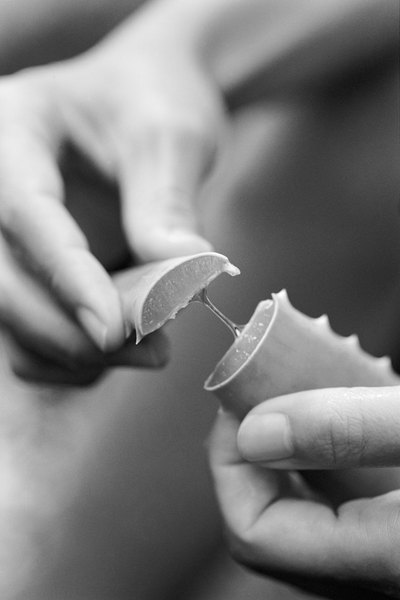
Cutting a Small Part of Aloe Vera to Use

A common houseplant, aloe vera treats skin ailments naturally.
Many households have an aloe vera plant (aloe barbadensis) among the collection of plants. Aloe vera grows outdoors in U.S. Department of Agriculture plant hardiness zone 9 and above; however, the plant is often grown indoors. Aloe vera gel has been used for centuries by many cultures to treat common skin ailments, such as sunburns. A member of the lily family, aloe vera leaves can be cut for use as an all-natural skin remedy.

About Aloe

The aloe plant grows indoors, but can be placed outdoors in tempertures above freezing.
The perennial succulent, aloe vera, grows to a height of 4 feet with leaves reaching 3 feet long. The thick, spear-shaped leaves taper at the ends and often have spiked edges. These green, speckled leaves contain gel that can be spread on the skin to treat skin irritation. This plant requires loose, well-drained soil or a potting mix designed for cacti, and a large drain hole in the pot. If grown outdoors, aloe vera prefers full sun and well-drained soil. Indoors and outdoors, the soil needs to dry out before soaking with water.

Proper Cutting

Cut a leaf of the aloe vera plant to extract the gel.
Taking aloe vera cuttings requires few tools. Although the leaves can be snapped off with your hands, use a sharp knife to ensure the leaf edge does not tear and the plant remains appealing to the eye. If you wish to start a new aloe plant, cut one sprout, or offset, close to the base when the offset is about 2 inches long. Allow the plant to scab over before replanting it in fresh potting mix.

Topical Uses

Aloe vera gel soothes skin irritation.
Squeeze the gel out of the leaf and apply topically to treat skin irritation such as minor burns, sunburn, small cuts and scrapes. Aloe vera gel contains chemicals that relieve pain and inflammation, as well as encourage skin repair and growth. As with all topical treatments, discontinue use if a rash appears. People with latex allergies may wish to avoid aloe vera. Consult a health professional if you are unsure whether aloe vera gel is the proper herbal treatment for you.

Other Uses

Aloe vera has been taken orally as a laxative.
Cultures around the world use the aloe vera plant to treat ailments not related to the skin. Aloe latex, a yellow substance found close to the leaf skin, is a powerful laxative. Taken orally, parts of the aloe plant treat diabetes and lower cholesterol. However, if taken in large doses, aloe vera can cause stomach cramps or kidney damage. In addition, a high tolerance for the laxative can develop quickly. Consult a health care professional before taking aloe vera orally.